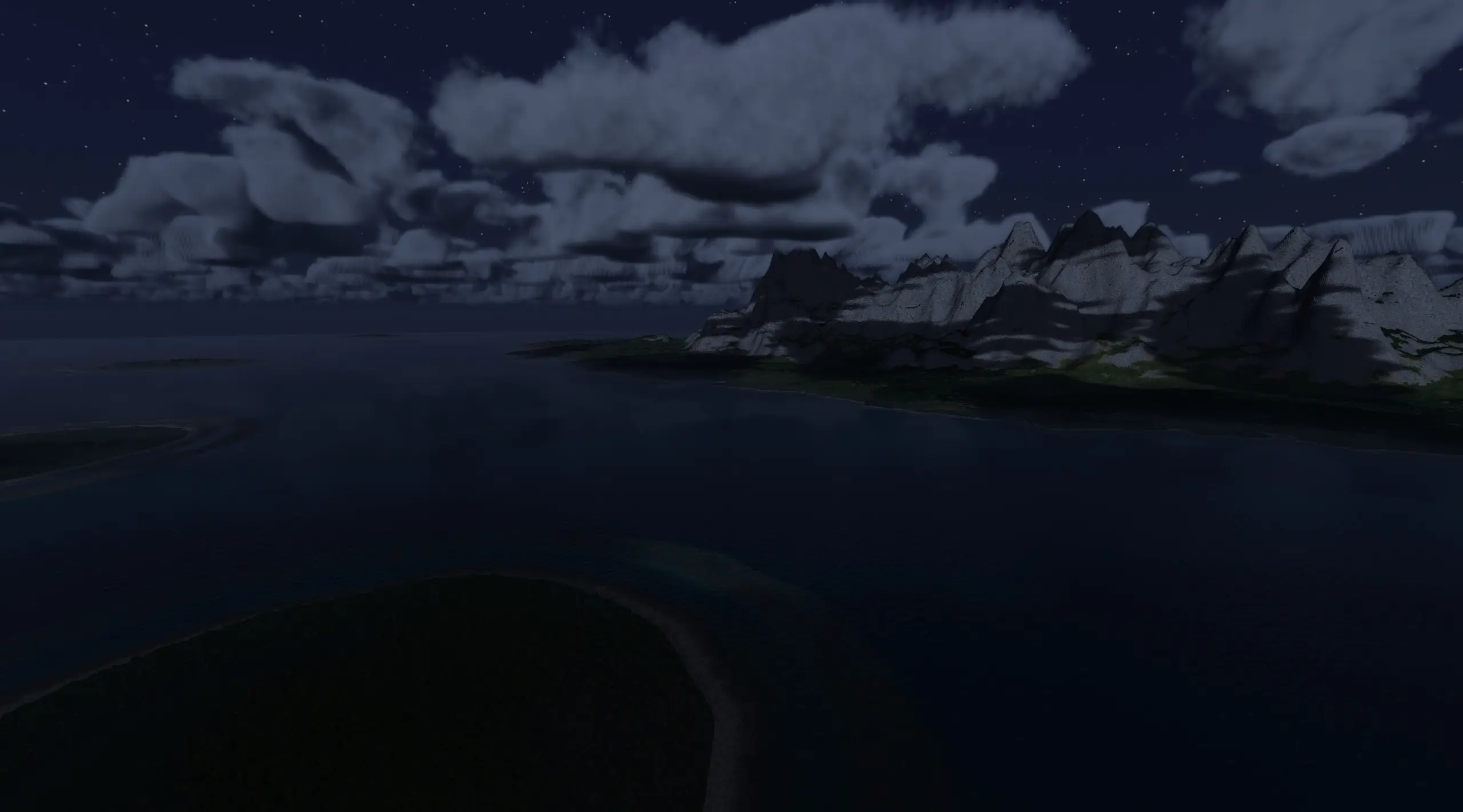
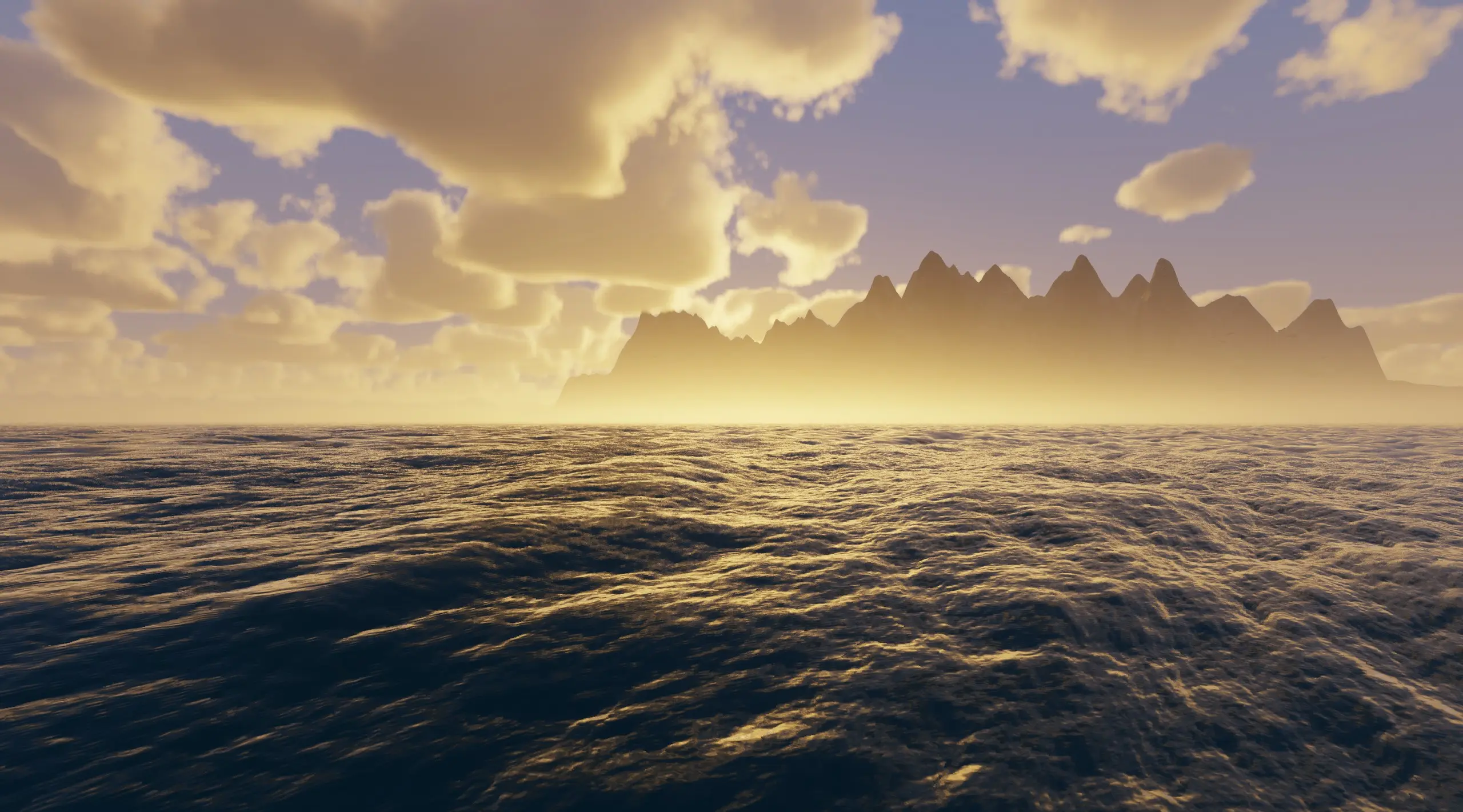
Open water
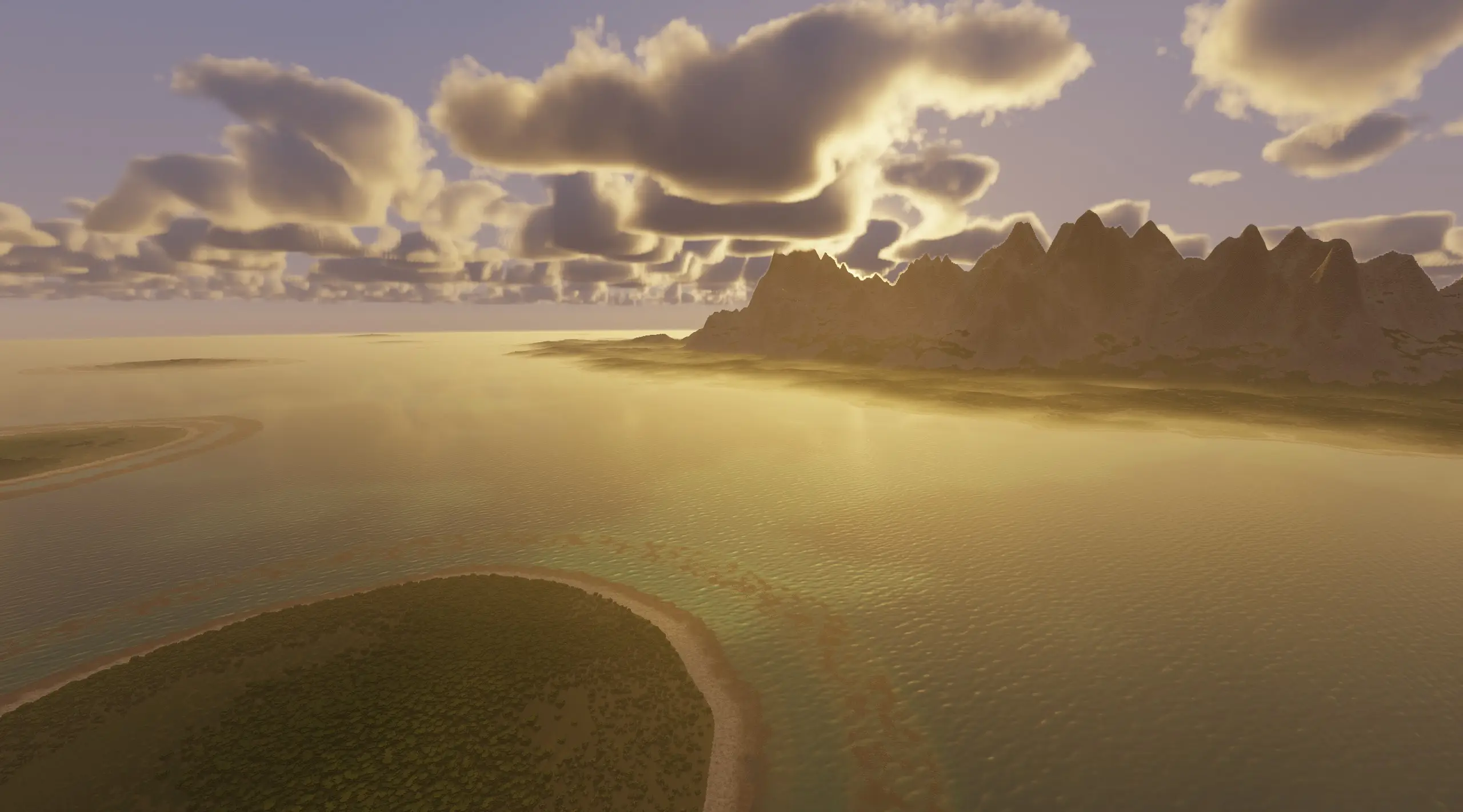
FFT seas with swell, chop and foam, shore waves that run up the beach, and sun glitter on every crest. Ships read the same wave heights on the CPU, so buoyancy matches what you see.
Lens shows
Move over the frame to look inside it. Keys 1 to 5 switch the view.
Tap the frame to look inside it.
Closed beta sign-ups are open. Release window: Q2 2027.
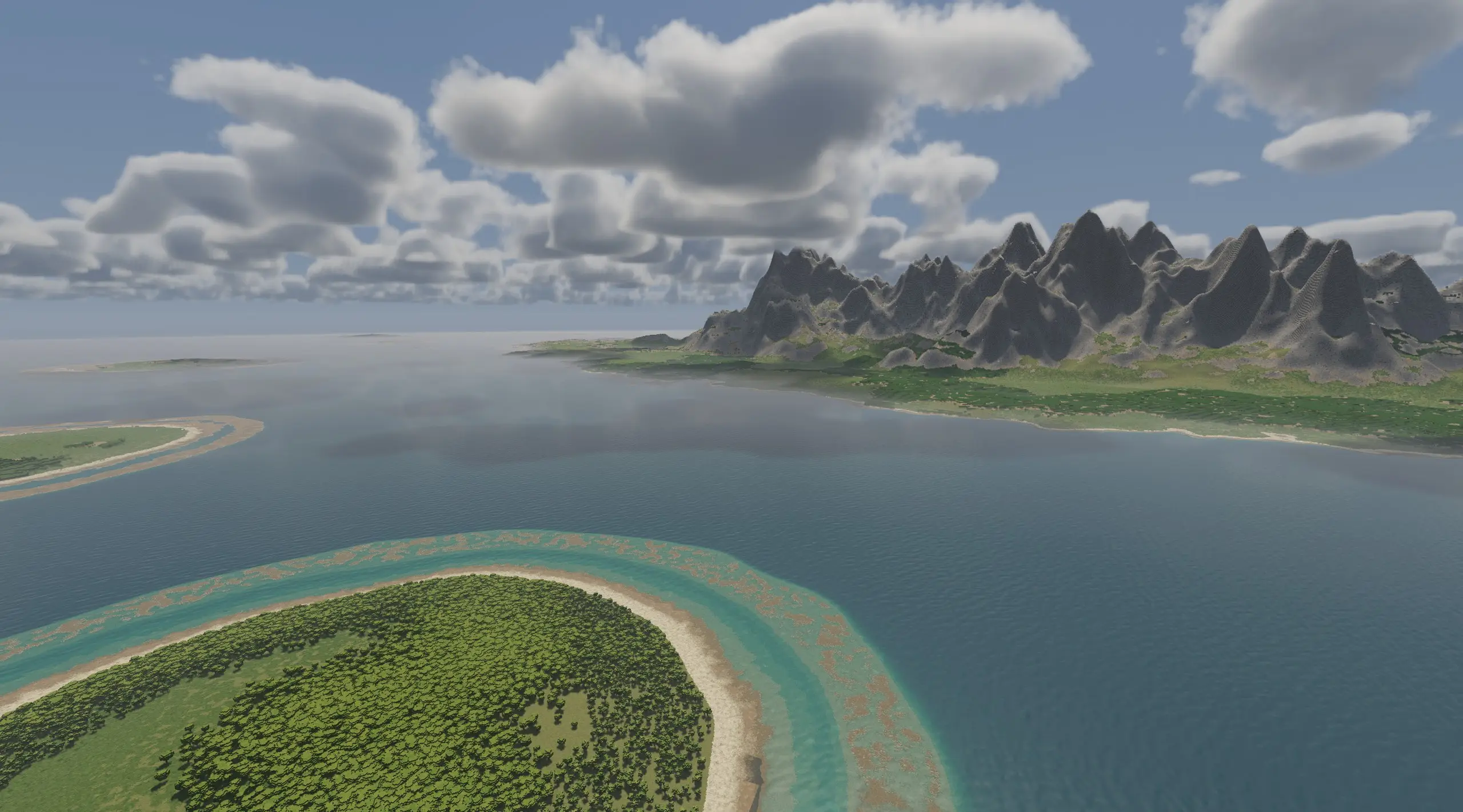
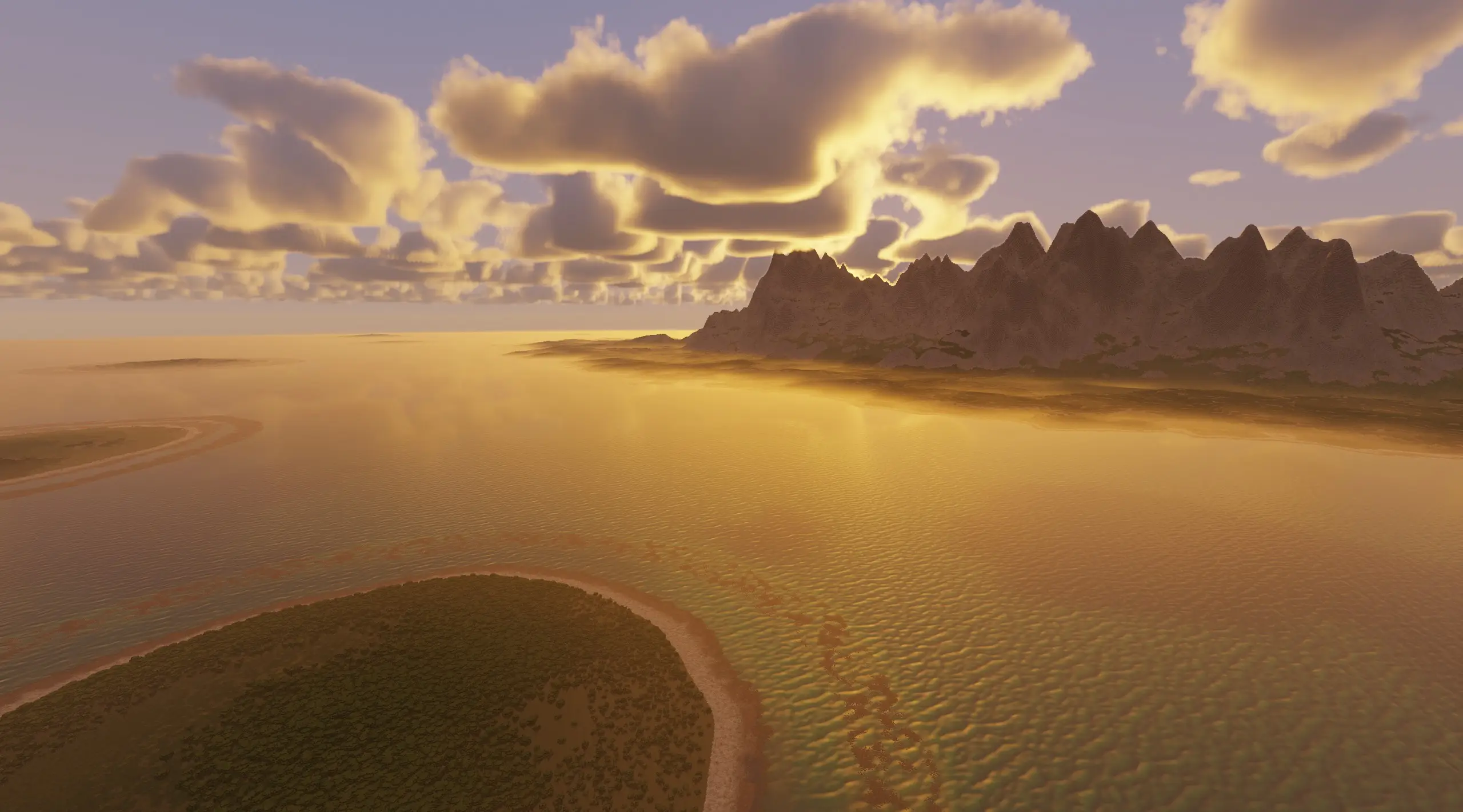
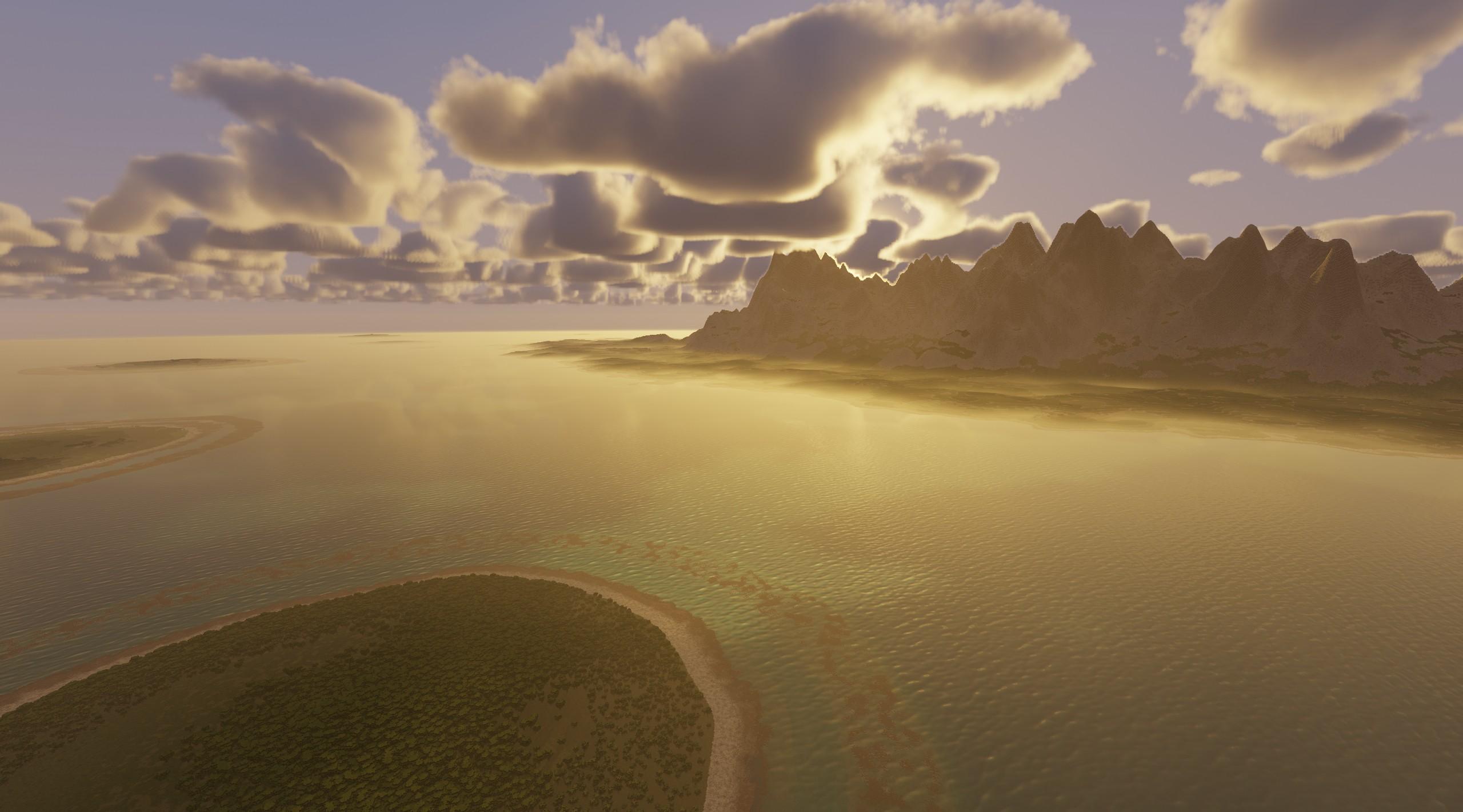
Real-time frame from Voxirae. Golden hour, 700 m over the archipelago.
Every world in Voxirae is built from five-centimetre voxels, generated and lit on the GPU, and streamed fast enough to cross at a thousand kilometres an hour without a single hole.
There are no meshes to rebuild when you dig, and the light updates as the world changes.
The world around the camera lives in eight nested levels. Each level doubles the voxel size and the distance it covers, so detail goes where you can see it. When a fine level is not ready yet, rays fall back to the coarser one: coarse first, never a hole.
| Level | Voxel | Reach |
|---|---|---|
| L0 | 5 cm | 64 m |
| L1 | 10 cm | 128 m |
| L2 | 20 cm | 256 m |
| L3 | 40 cm | 512 m |
| L4 | 80 cm | 1 km |
| L5 | 1.6 m | 2 km |
| L6 | 3.2 m | 4.1 km |
| L7 | 6.4 m | 8.2 km |
Chunks of 32³ voxels are generated on the GPU and kept in fixed-size slots, so nothing is allocated while you play.
On autopilot at 1,000 km/h the engine averages 234 fps with dynamic resolution, and only 2% of pixels ever fall back to a coarser level.
Big-world mode adds levels for a 32 km window and streams tiled worlds, such as a 41 × 41 km archipelago with 27 islands.
The frame at the top of this page, rebuilt the way the GPU builds it. Scroll to add each stage.
Every pixel marches a ray through the world: empty space in big leaps (column tops, 8³ blocks, 4³ bricks), then single voxels near the surface. Blue took few steps, red took many.
Each ray hits the coarsest level whose voxels still fit inside the pixel. Nearby: 5 cm. On the far mountains: metres.
Materials are computed while shading: grass, sand, rock bands, snow and seabed come from height, slope, moisture and temperature, not from textures.
Shadow rays toward the sun, voxel ambient occlusion, and DDGI-style probe cascades that let light bounce without a limit.
A JONSWAP-spectrum FFT ocean in three cascades, with Fresnel reflections, refraction, absorption and shore foam.
Height fog and froxel volumetric fog lit through the sun map: the haze that turns gold when the sun is low.
A volumetric layer between 1.5 and 4 km on a round planet, with multiple scattering and shadows on the ground.
TAA (or FSR 3.1, DLSS), exposure, bloom and ACES tone mapping. The frame is done.
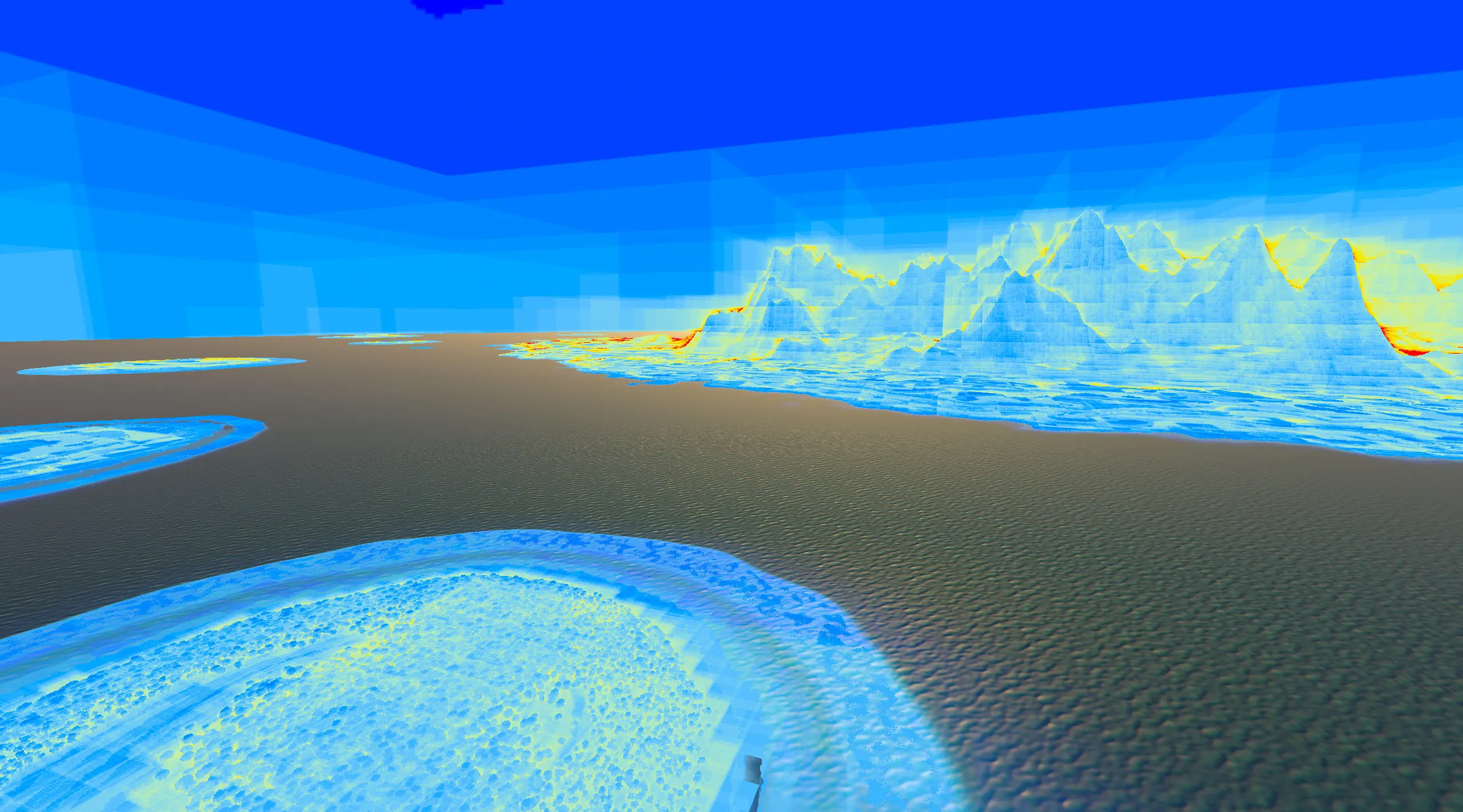
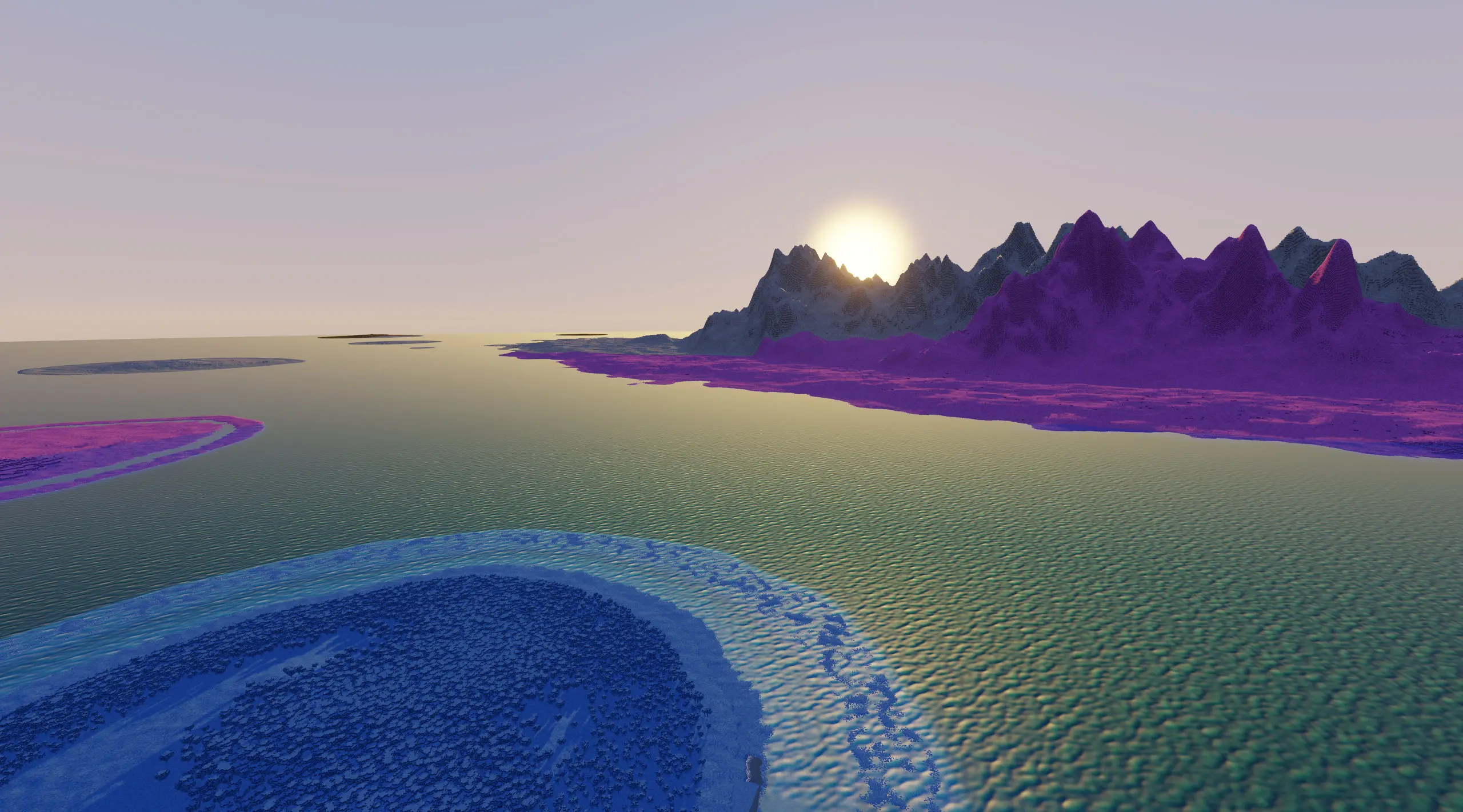
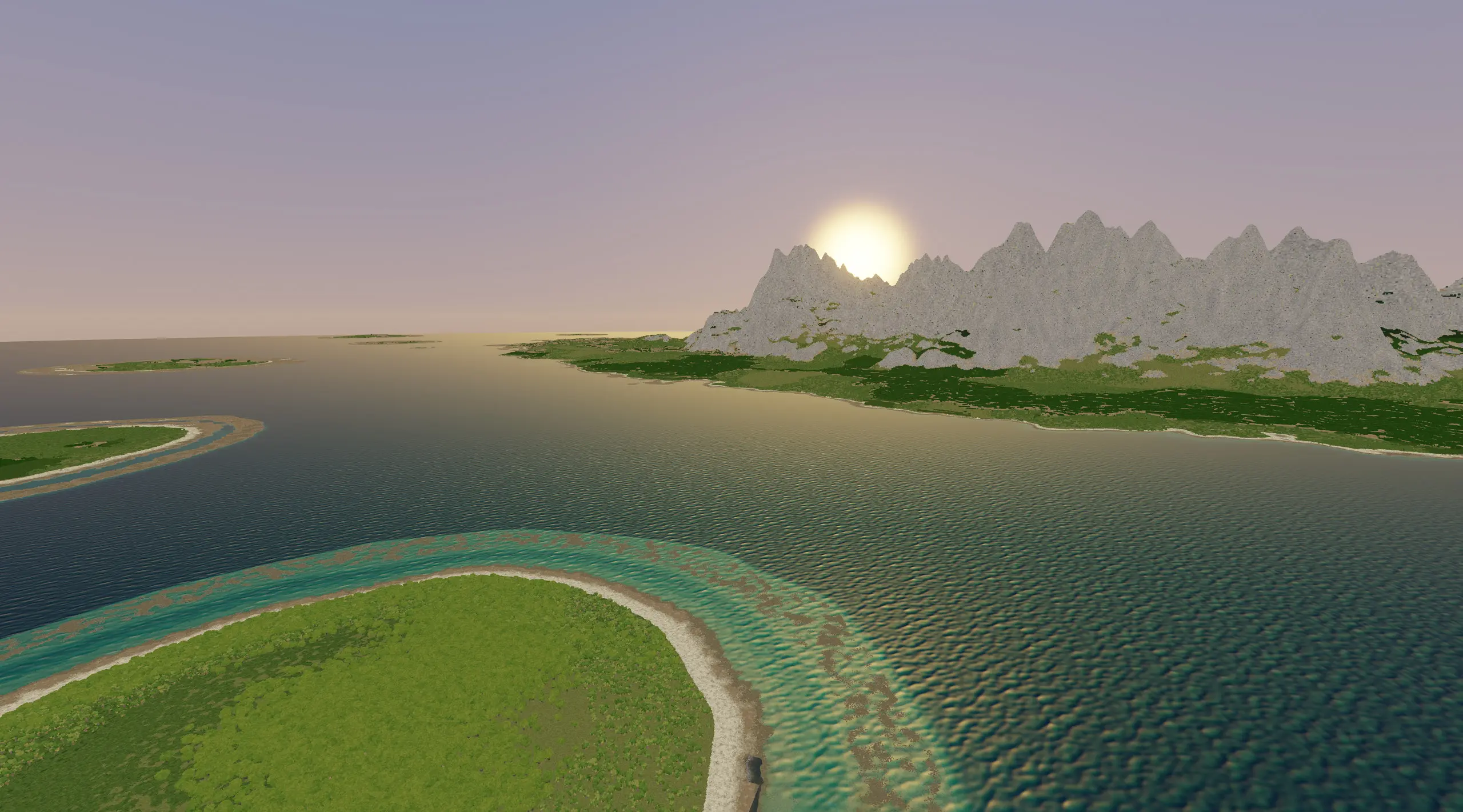
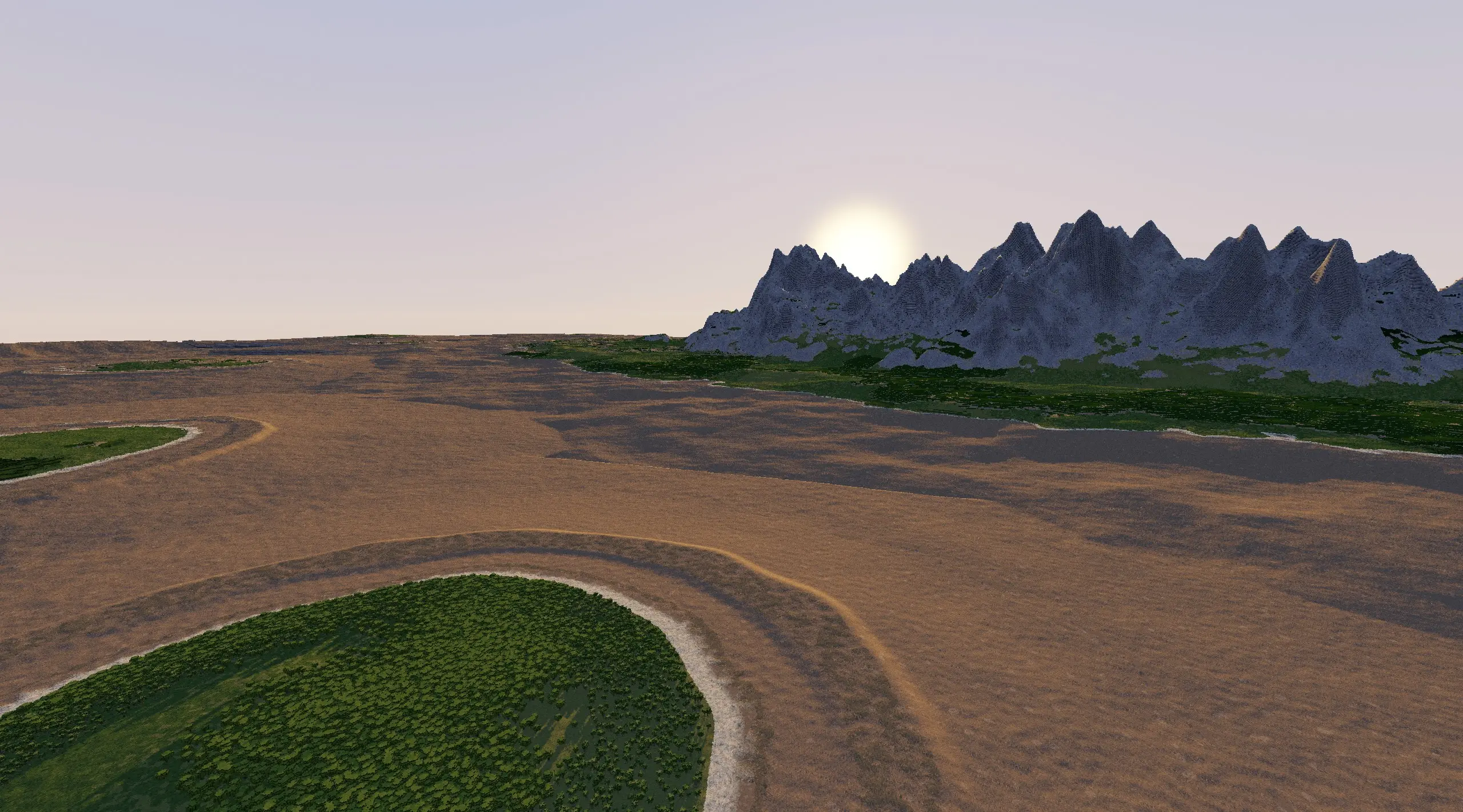
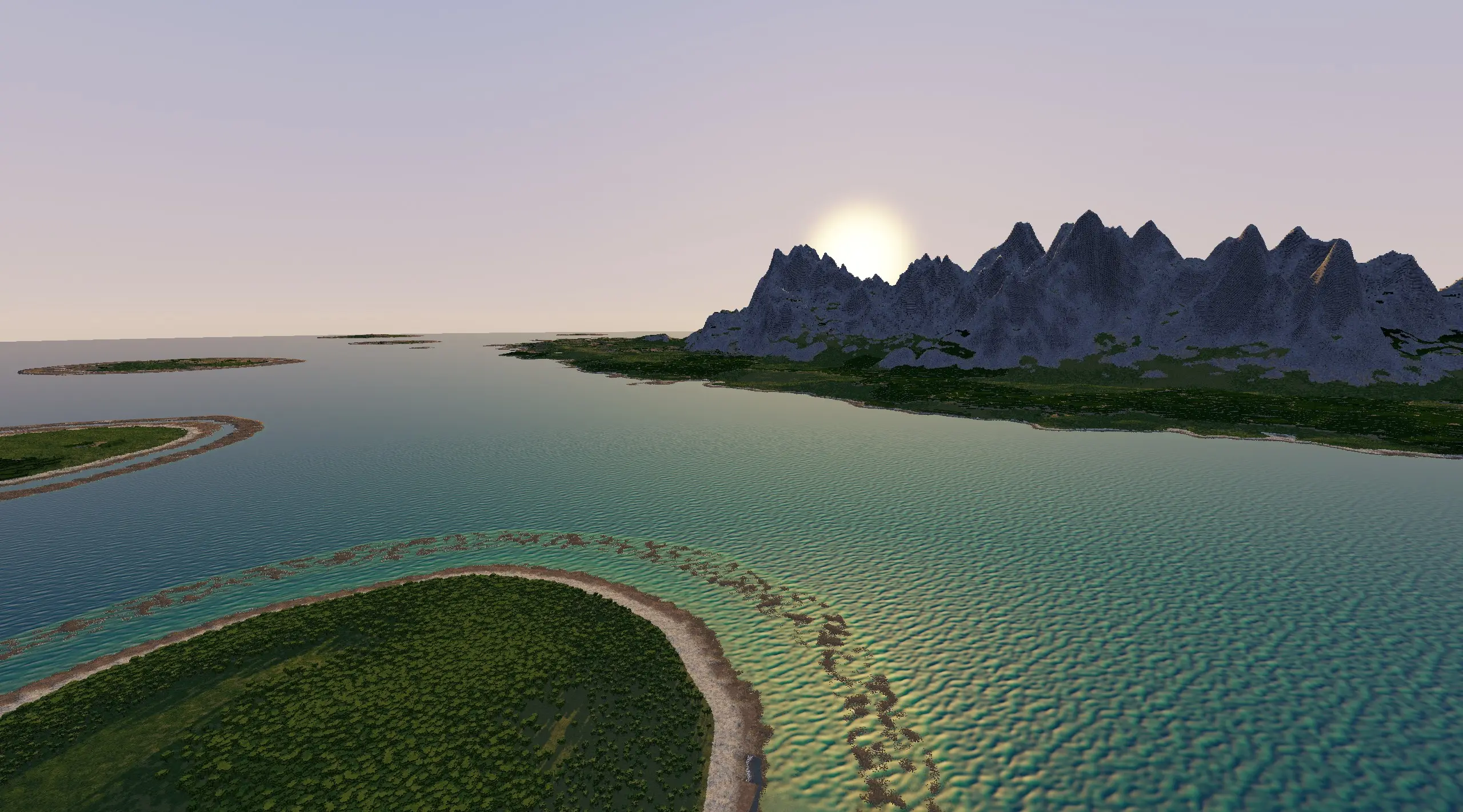
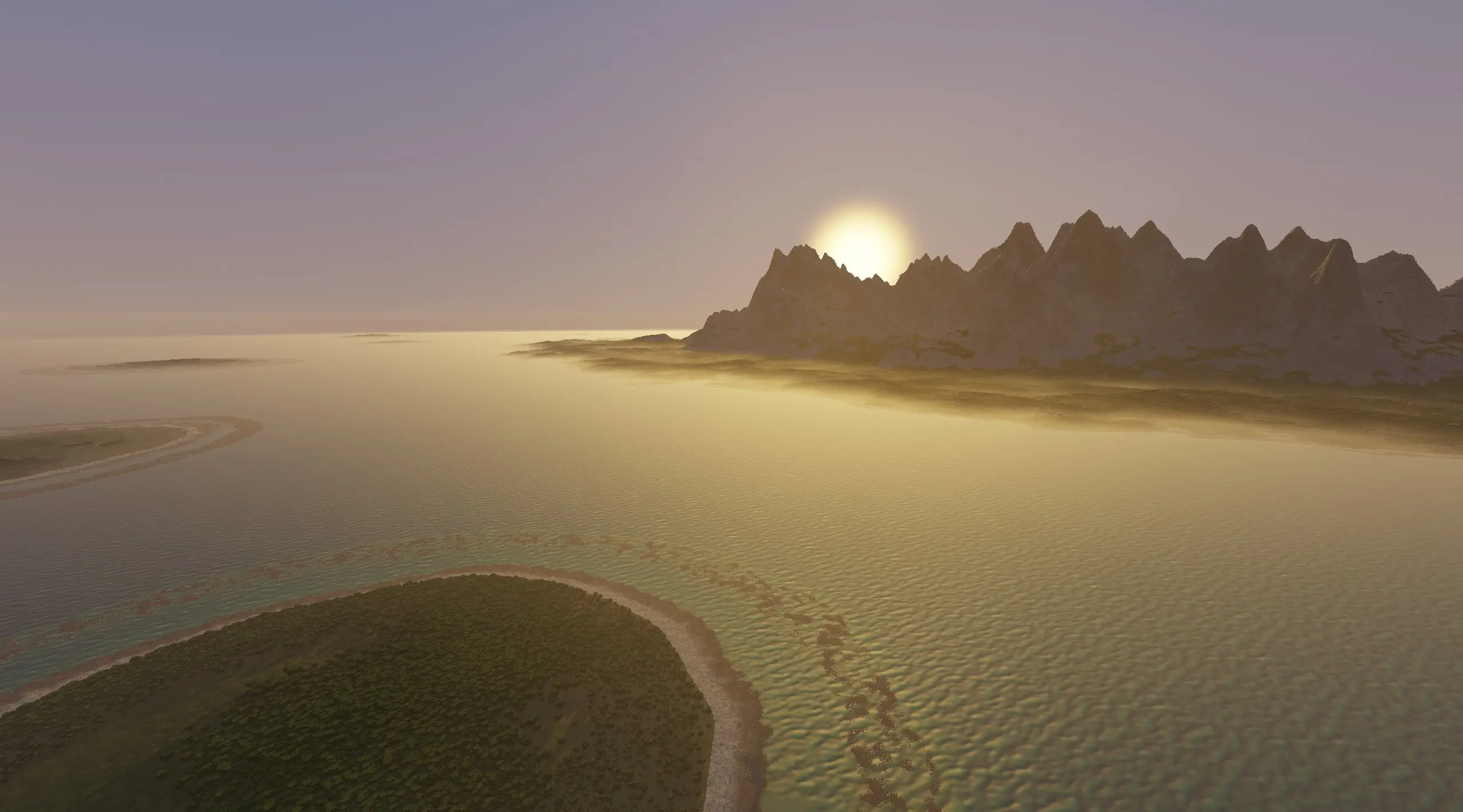
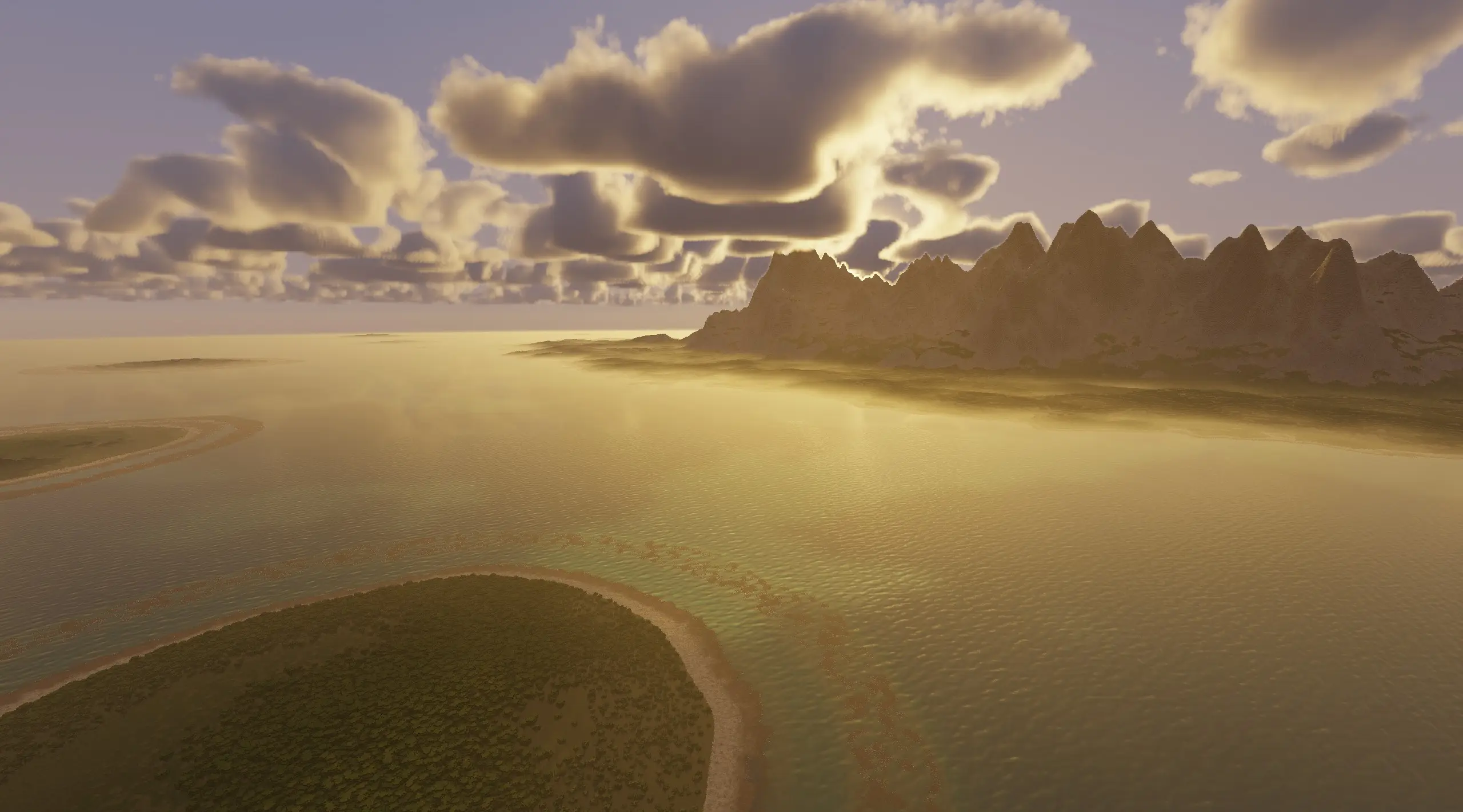
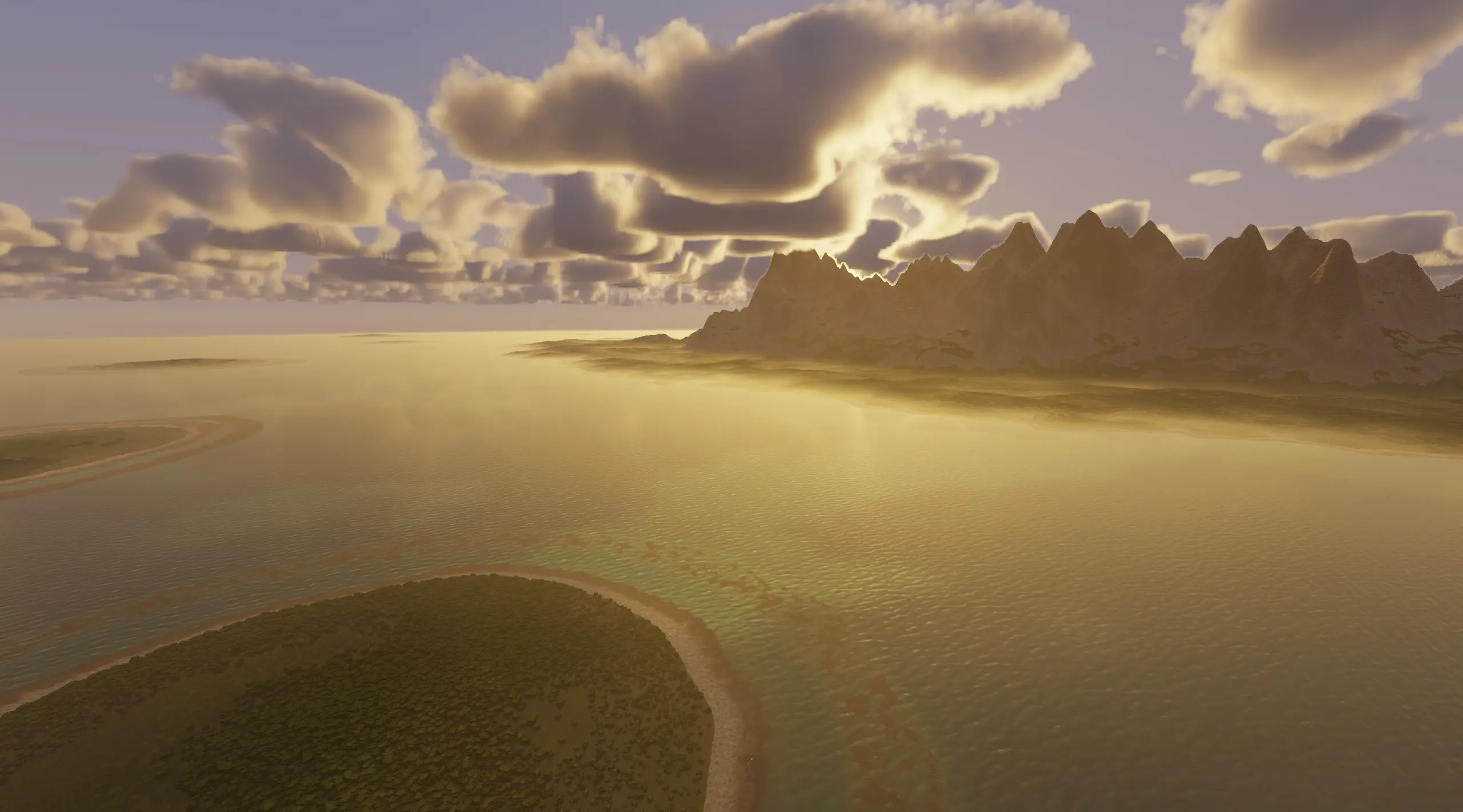
Total GPU time 5.90 ms
GPU times measured on this frame at 2560 × 1421 on an RTX 3080 Ti (High preset, render scale 1). The images are rendered at 2× for this page.
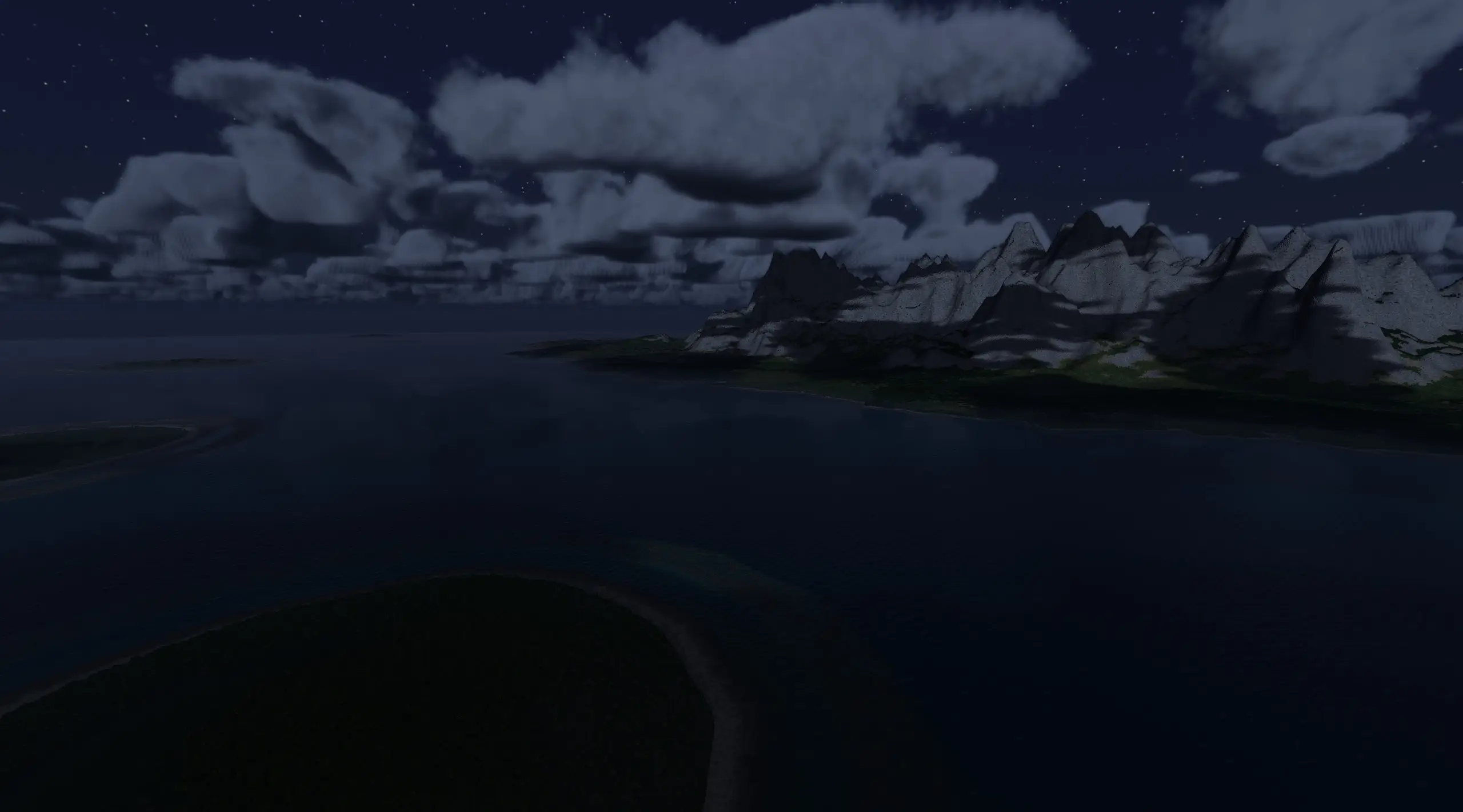
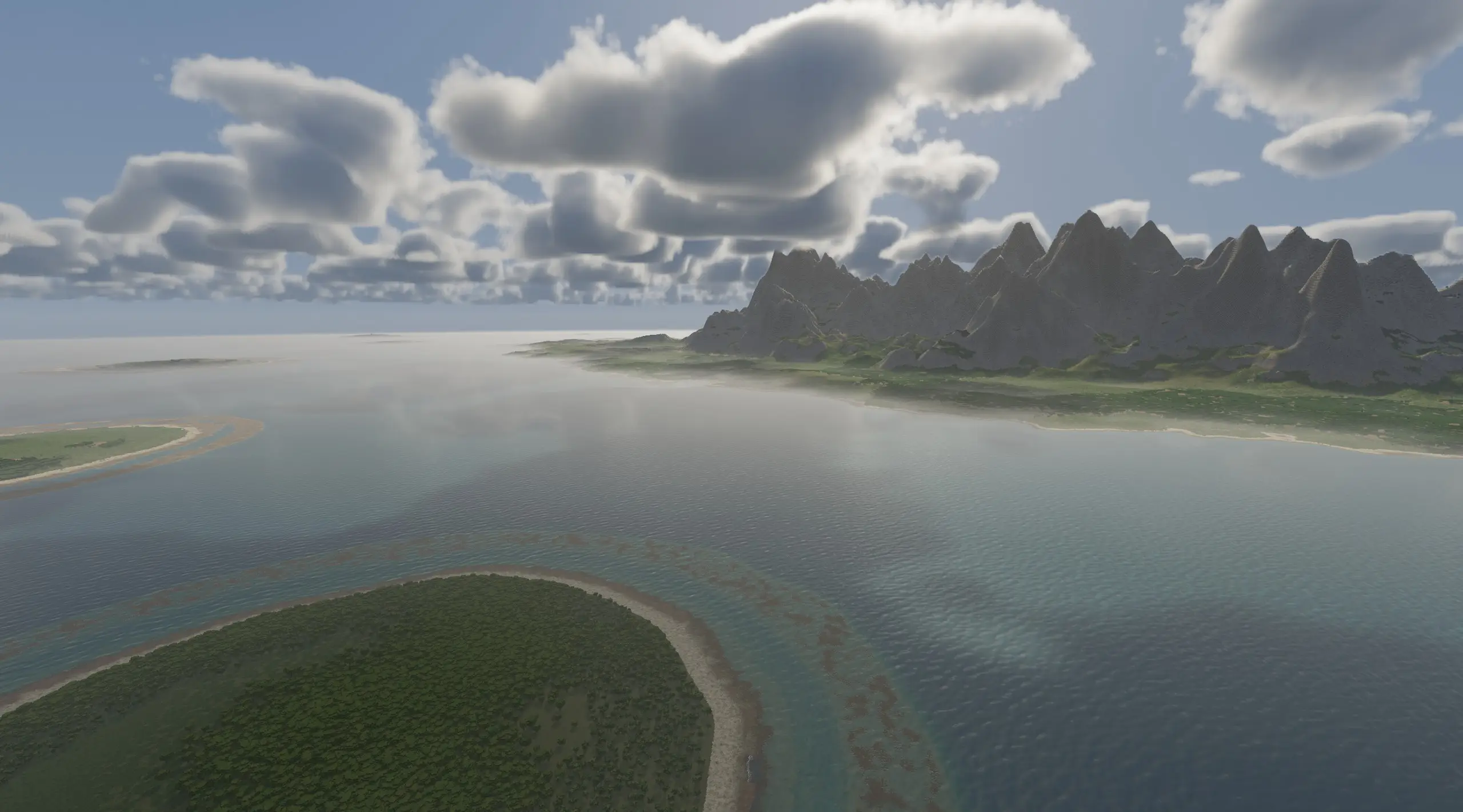
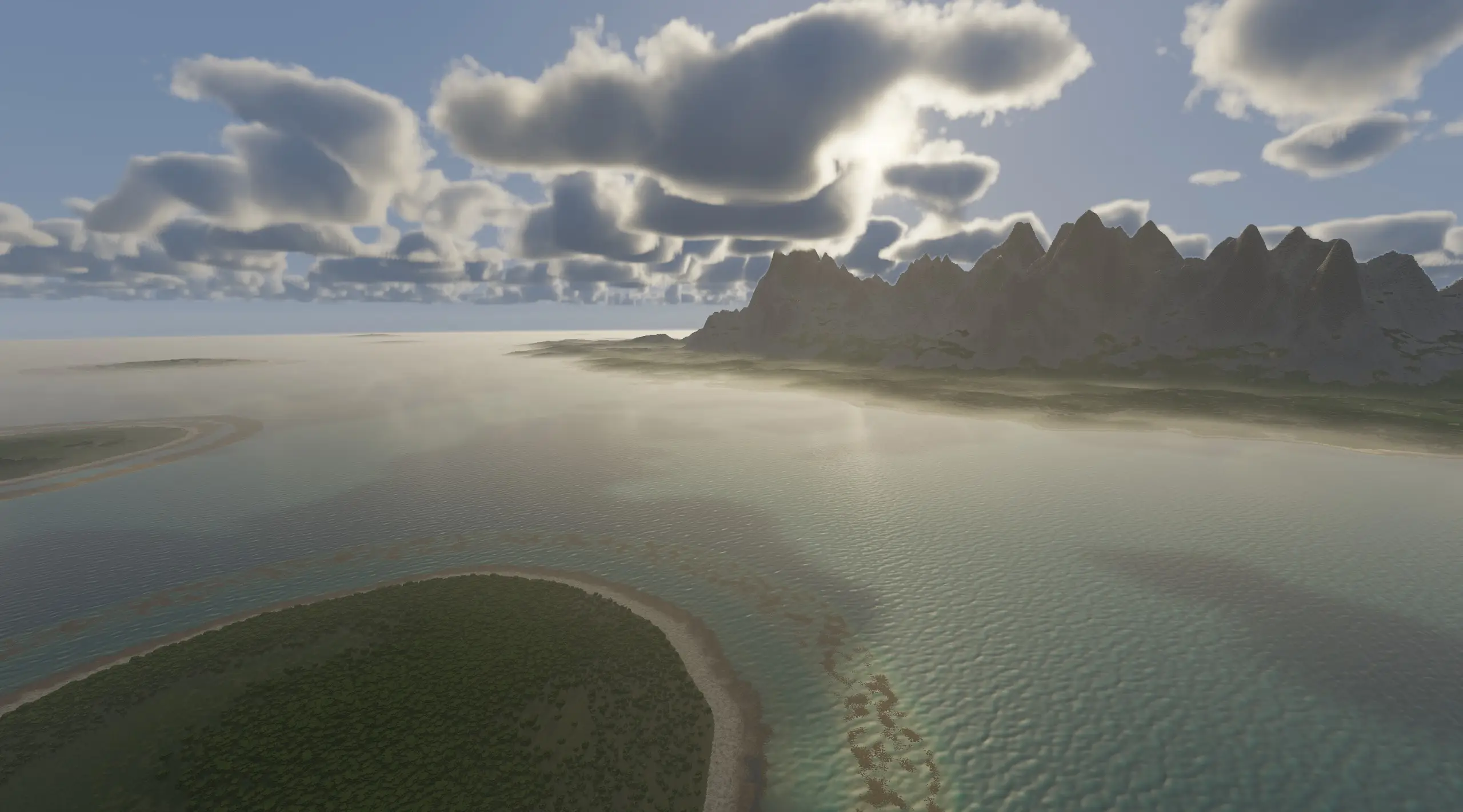
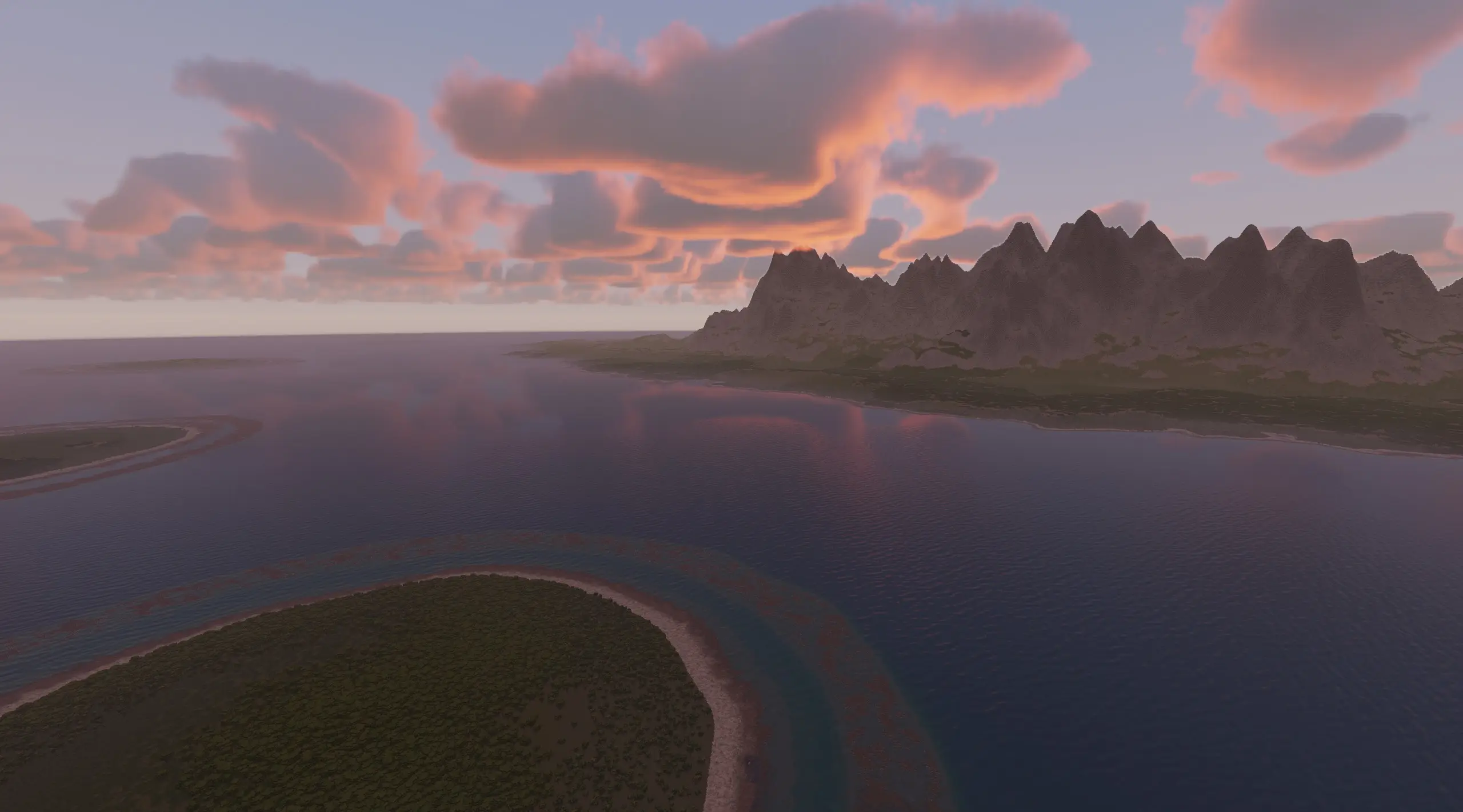
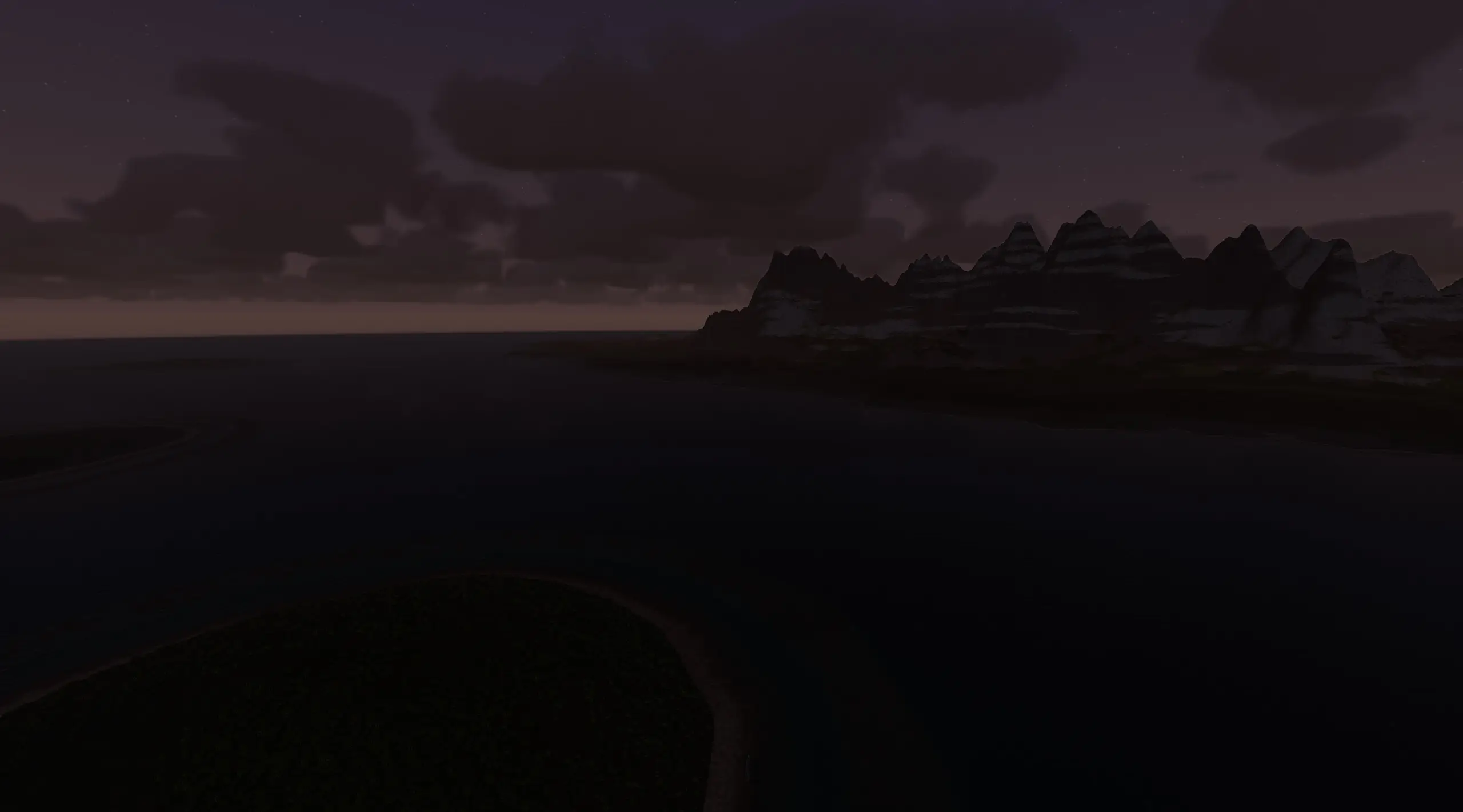
Same island, same camera, one sun angle. The sky colour, the air mass that reddens the light, the cloud lighting, the moon and the stars all follow it.
The same view over the archipelago at a different time of day.
Every system below is in the engine today. Every image is a real-time frame.
FFT seas with swell, chop and foam, shore waves that run up the beach, and sun glitter on every crest. Ships read the same wave heights on the CPU, so buoyancy matches what you see.
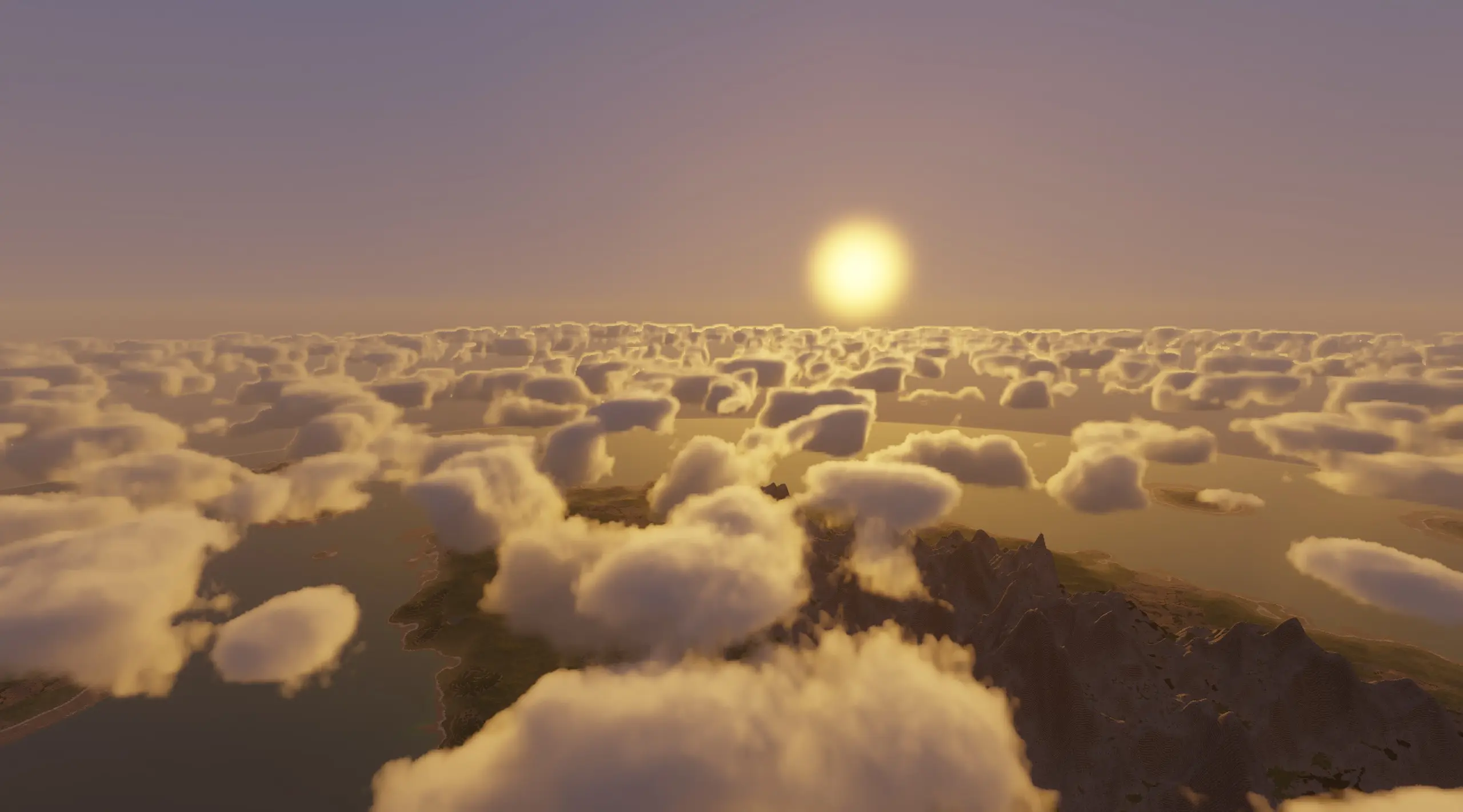
Volumetric clouds you can fly through, lit by the real sun with multiple scattering. Their shadows sweep the ground up to 64 km away, and a sky probe feeds water, mirrors and GI.
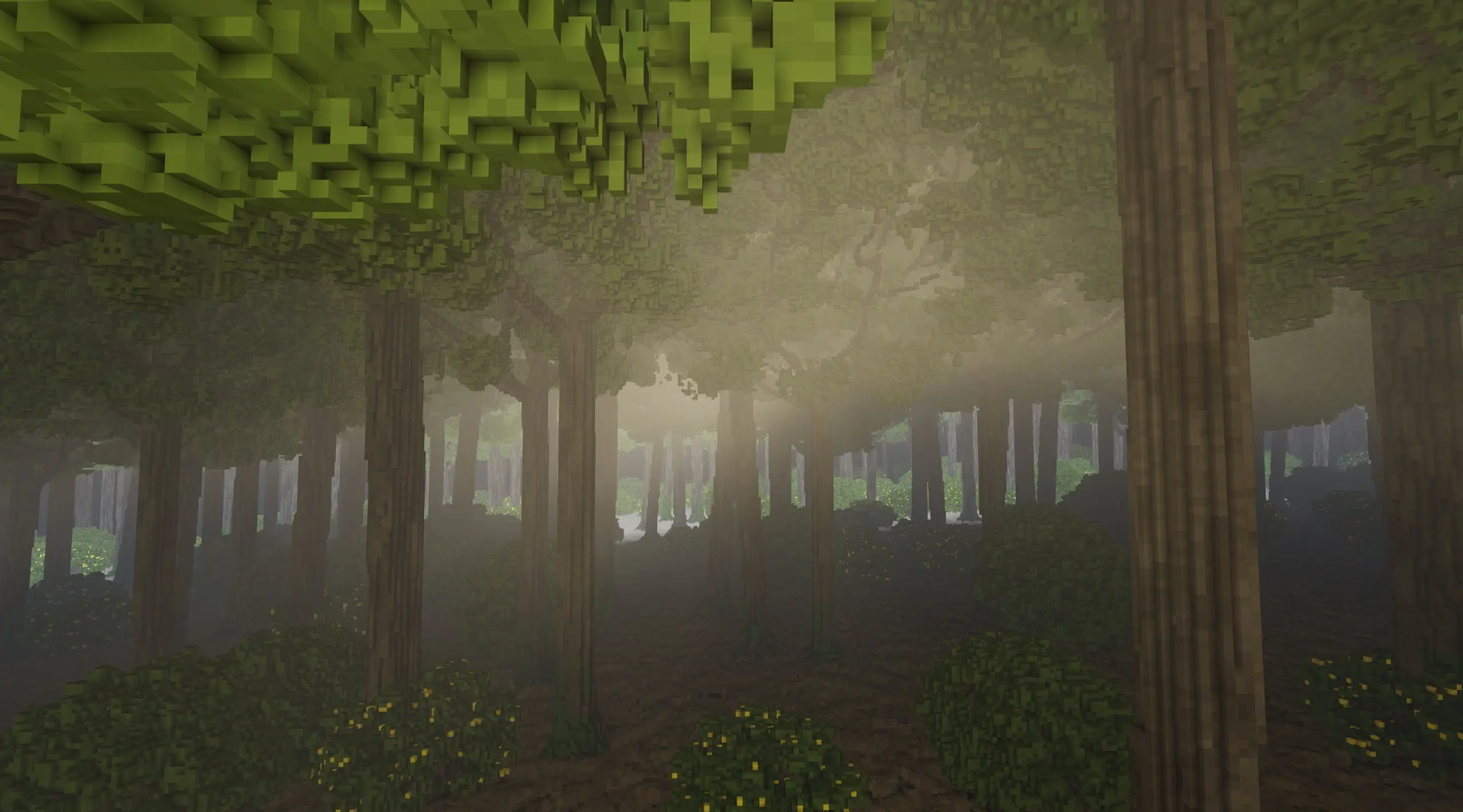
Froxel fog lit through the sun map: shafts between trunks, haze between mountains. Lamps and headlights light the fog too, with shadows.
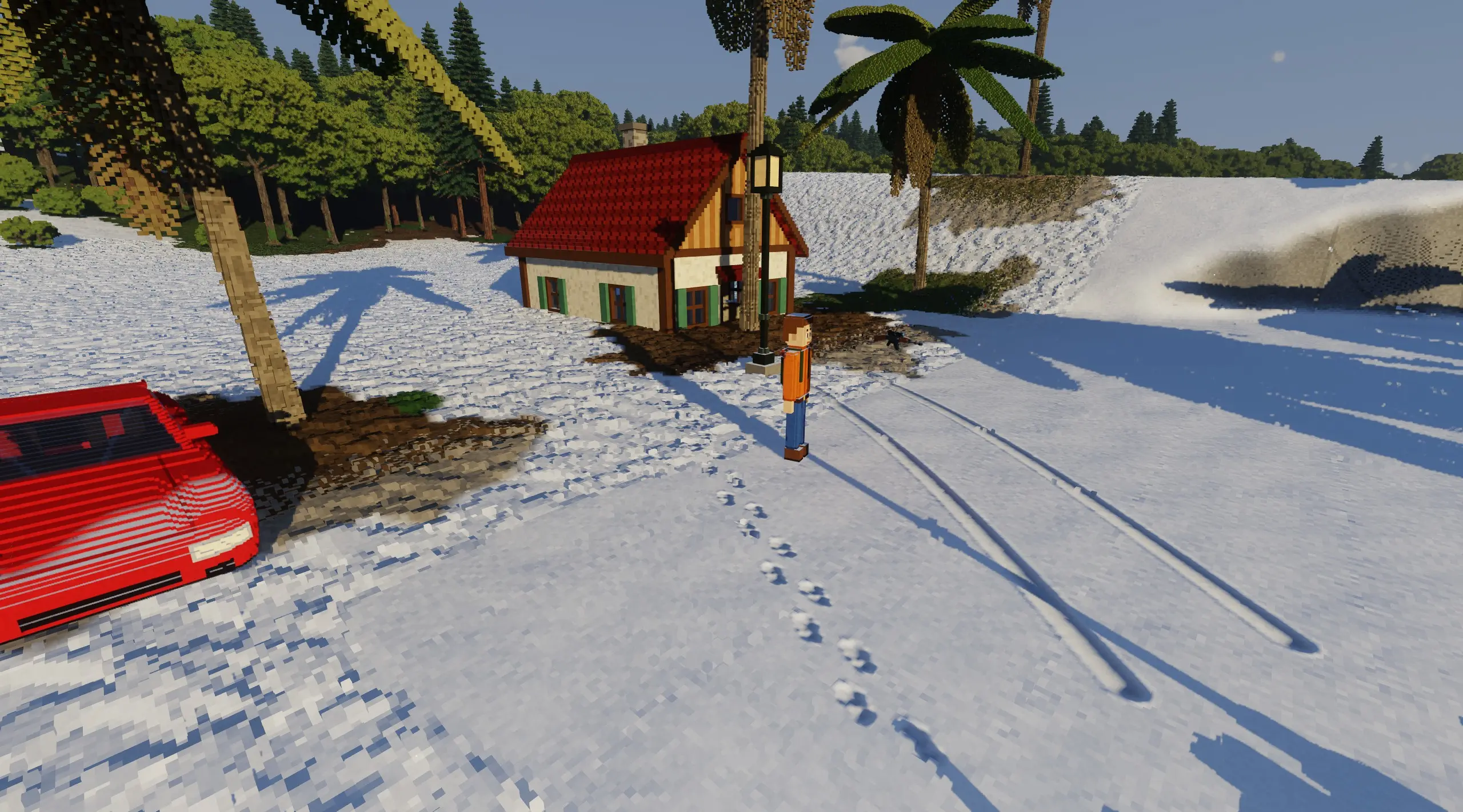
Rain soaks surfaces and fills puddles. Snow settles on terrain and on objects. Footprints and wheel tracks stay in snow and sand. Sea fog rolls in. Seasons change the land.
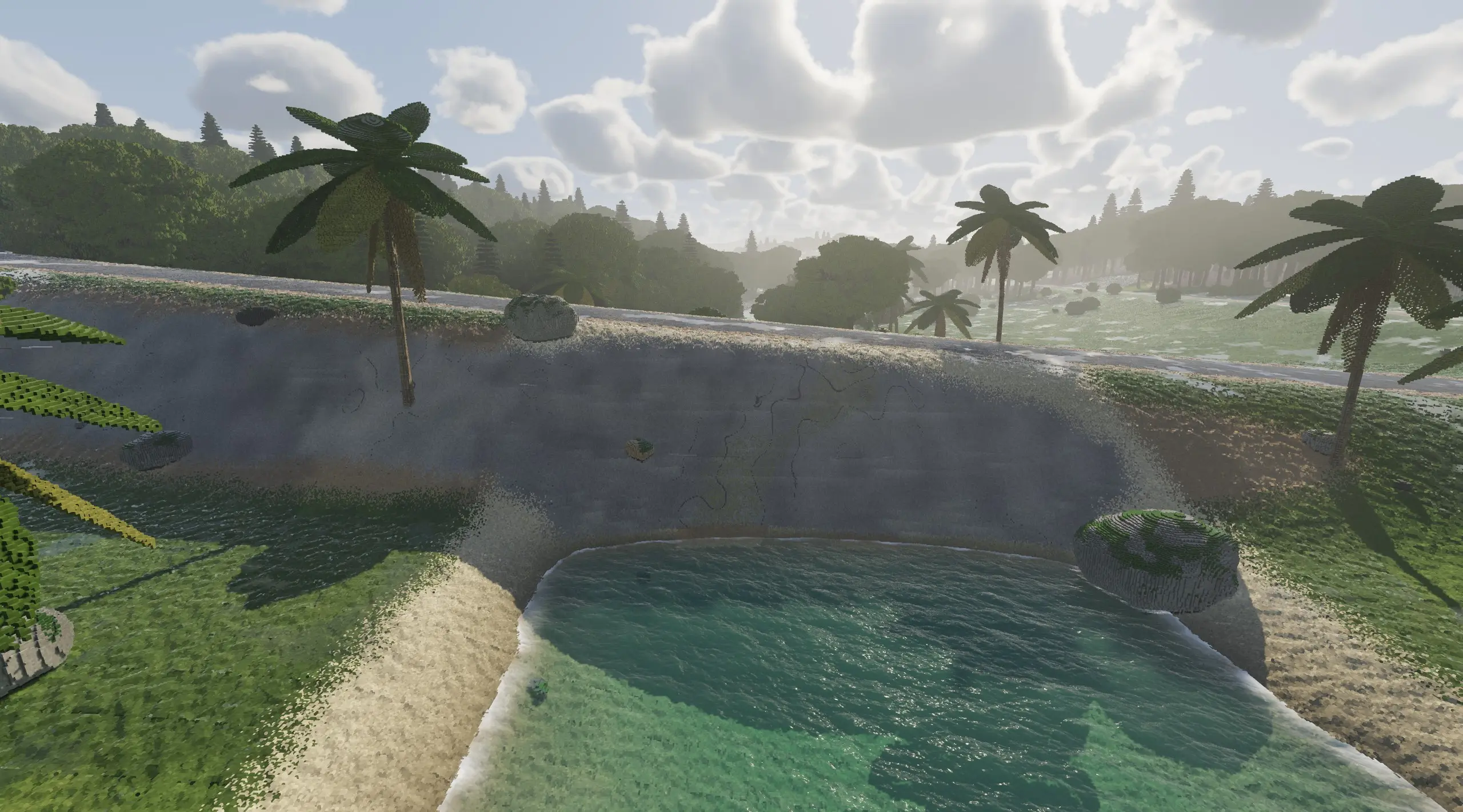
Lakes are carved into the terrain with natural shores, rivers flow, shallow water shows its sand. Above the freezing line the lakes ice over.
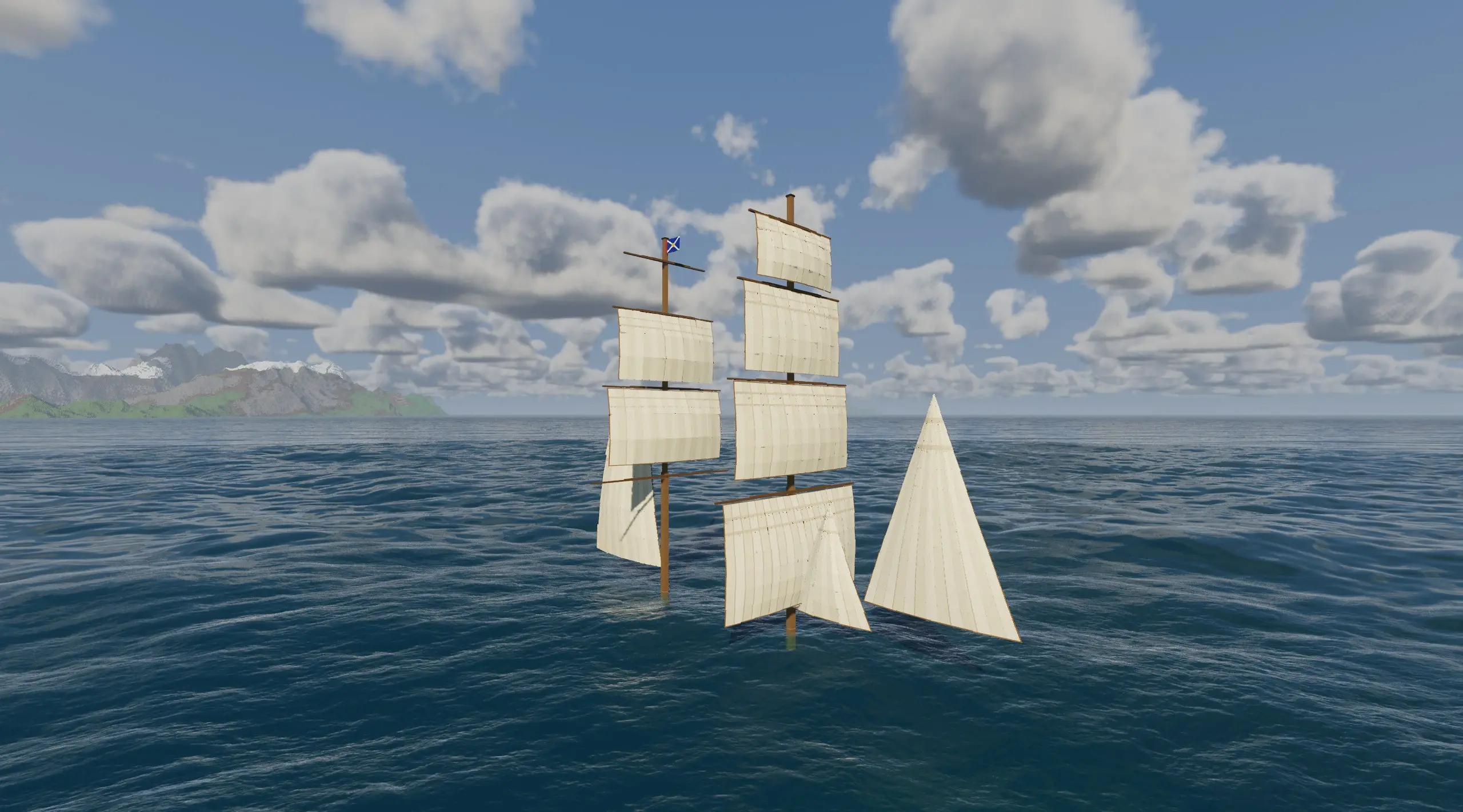
Deformable voxels on bones: sails that fill and furl, flags, ropes, anchor chains, hair, foliage and clothing, at 1 to 2.5 cm.
Voxirae is a full engine, not just a renderer. Systems a game may not need are plugins you switch on per project.
Under the hood
RTX 3080 Ti, Core i9-12900KS, 2560 × 1421 output, every effect on unless noted. Median GPU frame times from the engine’s own benchmark runs (September 2026).
| Preset | GPU frame | Frame rate |
|---|---|---|
| Low | 4.61 ms | 217 fps |
| Medium | 5.12 ms | 195 fps |
| High (default) | 5.47 ms | 183 fps |
| Ultra | 5.53 ms | 181 fps |
| Mode | Internal resolution | GPU frame | Frame rate |
|---|---|---|---|
| Native TAA | 2560 × 1421 | 5.28 ms | 187 fps |
| FSR 3.1 Quality | 1707 × 947 | 4.17 ms | 238 fps |
| DLSS Quality | 1707 × 947 | 4.40 ms | 224 fps |
| FSR 3.1 Performance | 1280 × 711 | 3.10 ms | 317 fps |
| DLSS Performance | 1280 × 711 | 3.50 ms | 282 fps |
| DLAA | 2560 × 1421 | 6.32 ms | 156 fps |
| Run | Average | 1% low | Coarser pixels |
|---|---|---|---|
| Autopilot, 300 km/h | 241 fps | 156 fps | 0.045% |
| Autopilot, 1,000 km/h | 234 fps | 164 fps | 2.0% |
| Car, 150 km/h | 217 fps | 150 fps | 0.007% |
Where the engine stands today. The release window is the second quarter of 2027.
Leave your email and tell us what you would build. We will write to you when your beta access is ready.
Signing up is free. We only use your details for the beta and release news.
Voxirae is a voxel game engine written in C++20 on Vulkan 1.3 with Slang shaders. It renders worlds made of 5 cm voxels by ray marching them on the GPU, with real-time global illumination, FFT oceans, volumetric clouds and weather, and it ships with gameplay, physics, networking, audio, UI systems and an editor.
The release window is the second quarter (Q2) of 2027. A closed beta runs before that; sign up on this page to get an invitation.
Fill in the form on this page with your email address. We will email you when your beta access is ready. Signing up is free.
World voxels are 5 cm at the finest level. Eight nested levels double the voxel size at each step, up to 6.4 m, so the default view reaches about 8 km. Big-world mode adds levels for a 32 km window.
No. Its voxels are 5 cm, not 1 m blocks, and they are ray-marched instead of being turned into meshes, so you get natural terrain, caves, water and lighting at kilometre scale. You can still dig, fill and build at runtime.
Voxirae runs on 64-bit Windows with a GPU that supports Vulkan 1.3. DLSS needs an NVIDIA RTX card; FSR 3.1 works on other GPUs.
With every effect on, a 2560 × 1421 frame takes about 5.4 ms on the GPU (around 184 fps) on an RTX 3080 Ti. Quality presets, dynamic resolution, FSR 3.1 and DLSS trade detail for speed.
Yes. It includes UDP networking, dedicated headless servers, and entity replication with client prediction, reconciliation, interest management and lag compensation.
Yes: projects, scenes, a content browser, viewport tools, a voxel modeler, material and character editors, and panels that plugins can add.
Games are written in C++20 against the engine’s API and built with CMake. Optional systems are plugins with their own settings, GPU passes and editor panels, and your game can add its own plugins the same way.
Yes. Its documentation is written as task cards for AI agents, and it comes with MCP tools that build the game, check shaders, render models and inspect a running game.